Sawdust Hammer Mill
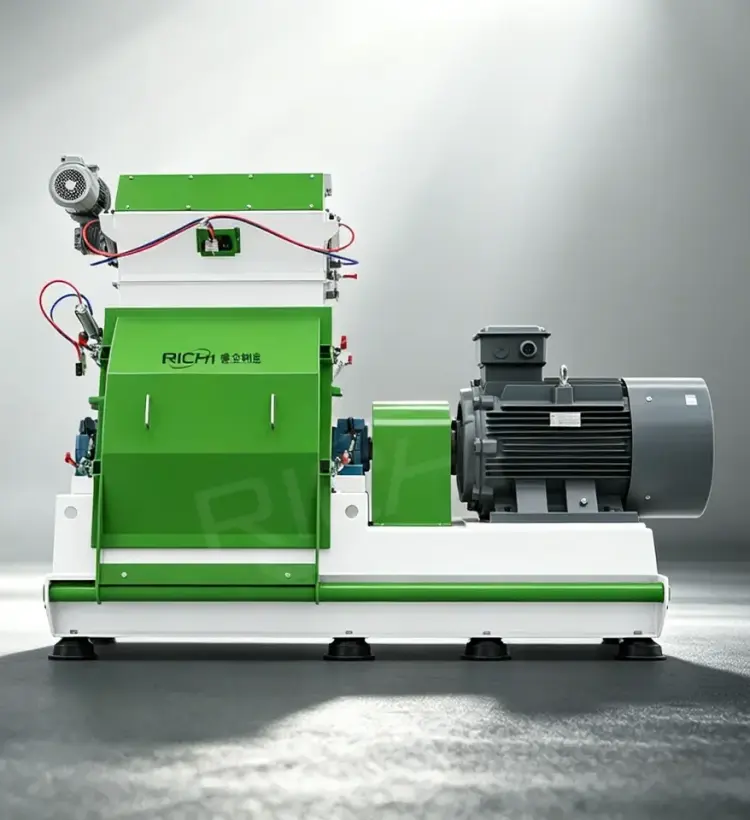
Sawdust Hammer Mill
Overview
The sawdust hammer mill is primarily used for the secondary processing of wood, converting wood chips, shavings, bamboo chips, and short branches into wood powder. It is not suitable for processing high-moisture sawdust, large wood pallets containing iron nails, or highly tough, thick tree roots. Large wood waste must first be pre-processed—using a wood pallet crusher or drum chipper to reduce it to small chips (2–5 cm)—before being fed into the hammer mill for fine grinding. The size of the finished product can be controlled by changing the screen, with a range of 0.5–20 mm.
The sawdust grinding machine has a wide range of applications and is used across various sectors, including the biomass energy industry, the board and papermaking industries, wood chip trading, organic fertilizer production, edible mushroom cultivation, cat litter and animal bedding manufacturing, the wood-plastic composite (WPC) industry, incense making, the machine-made charcoal and activated carbon industries, and environmental solid waste treatment.

Technical Advantages
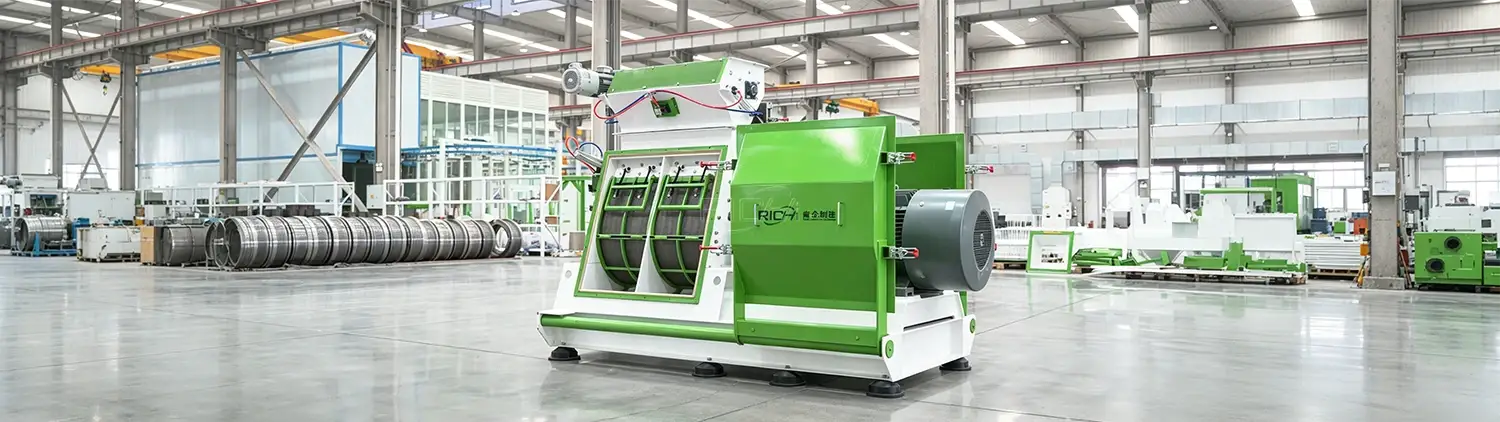
RICHI sawdust hammer mill utilizes an upgraded hammer-style crushing structure and features optimized crushing, feeding, and safety protection systems. It effectively resolves common issues found in traditional equipment—such as clogging, low efficiency, difficult maintenance, and unstable operation. Distinguished by uniform crushing, high output, low energy consumption, ease of maintenance, and safe, stable performance, it meets industrial requirements for the continuous, long-term processing of various biomass materials.

Heavy-Duty Grinding System
Our sawdust hammer mill utilizes highly wear-resistant, impact-resistant hammers that offer an extended service life. Optimized hammer layout provides full impact coverage for uniform particle size. Multi-size screens are quickly replaceable to produce wood chips of different fineness.
Variable Frequency Feeding & Anti-Blocking Design
The hammer mill can be equipped with an impeller feeder. It delivers uniform feeding and air sealing to stabilize main machine load and prevent material bridging. Meanwhile, it maintains negative pressure inside the grinding chamber for smooth pneumatic conveying and ensures continuous stable operation.
Stable Power and Transmission System
The rotor is precisely balanced, delivering low vibration during high-speed operation and supporting long continuous running. The sawdust grinder adopts a Siemens main motor with powerful output. For large models, direct coupling connection is optional to reduce transmission loss.
Pneumatic Conveying & Two‑Stage Dust Removal
Centrifugal fan + cyclone separator use negative pressure to extract wood powder for higher capacity. Efficient air-powder separation with bottom air lock to prevents dust leakage. Optional bag pulse dust collector keeps workshop dust low, meets environmental standards and improves working conditions.
Multiple Safety Protection
Interlocked safety system links the access door, protective housing, and start-stop controls.The machine won’t start unless the door is properly closed. It shuts down immediately if the access door or guard is opened during operation. Optional spark detection & extinguishing system to lower dust explosion hazard.
Easy Maintenance Structure
The movable access door opens fully, eliminating hard-to-clean corners and making the removal of material buildup and the replacement of hammers convenient. The linked screen-clamping mechanism allows for rapid screen installation and removal, as well as on-the-fly adjustment of output particle size. The entire machine requires little maintenance and has low failure rates.
Equipment Running Videos
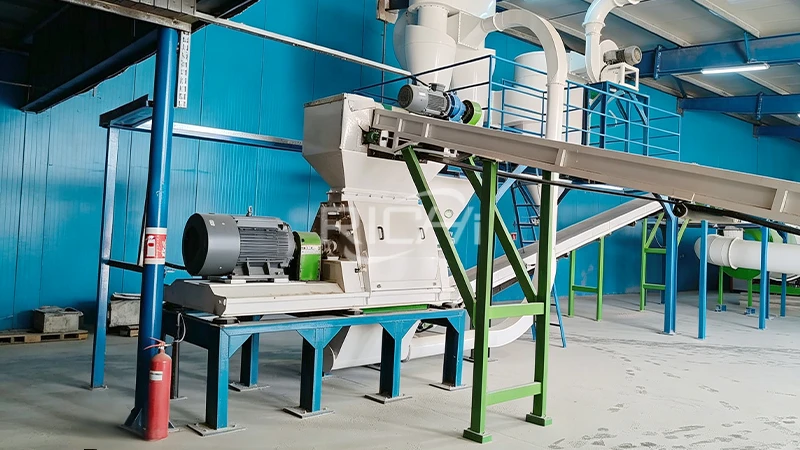
Sawdust Hammer Mill for Sale Romania
The client is a biomass pellets manufacturer, specializing in high-quality commercial biomass fuel pellets. The primary raw material is beech wood chips, characterized by high hardness and strong fiber toughness. The client’s setup includes a sawdust hammer mill paired with a forced-feed impeller, a configuration designed for processing hardwood that enables the single-pass conversion of irregular beech wood chips into wood powder. Additionally, the system incorporates a cyclone dust collector and an enclosed belt conveyor to minimize dust emissions. The wood powder is conveyed directly to the drying stage.
Sawdust Hammer Mill for Sale Worldwide
Below are customer cases from various countries for your reference. Please feel free to contact us for more details. We can customize the drying line solution for you.

Sawdust Grinding Machine for Thai Carbonization Plant
The client specializes in the production of machine-made charcoal and possesses large quantities of low-cost wood materials—such as mixed timber, slab wood, furniture offcuts, and wood chips—all of which require crushing and processing.
Since the raw materials vary greatly in size and shape, we designed a two-stage grinding process. A wood chipper first cuts large wood waste into 3~5cm wood chips, then a sawdust grinder further grinds them into wood powder. This enables all waste wood to be used as briquette feedstock and greatly cuts raw material costs.
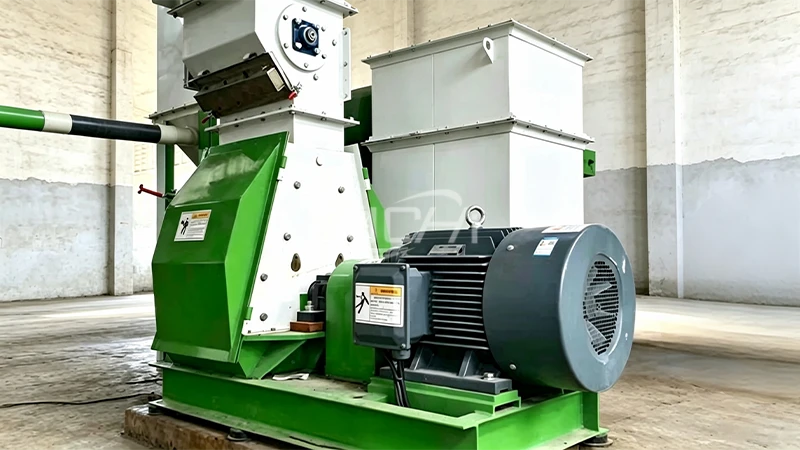
Wood Sawdust Crusher for Malaysian Board Factory
The client’s factory generates large quantities of wood waste daily, which not only occupies valuable space but also incurs costs for off-site removal and solid waste disposal.
To address this, the client plans to purchase a wood shredder to process materials such as offcuts, trim scraps, and wood chips for use in engineered wood production; this enables on-site utilization of factory waste and reduces the cost of purchasing raw materials.

Sawdust Grinder Machine for UK Cat Litter Processing Plant
Wood cat litter is popular in the UK market. And the customer has a stable supply of low-cost wood chips and wood scraps, which need to be ground into qualified fine wood material that meet the necessary standards for manufacturing pelletized cat litter, thereby ensuring the quality of the finished product.
Given the client’s relatively small production scale, a compact sawdust grinder machine with an hourly output of 0.5–0.6 tons was selected.
客户猫砂

Wood Sawdust Grinder for Germany Biomass Pellet Manufacturer
The customer commissioned us to build a biomass pellet production line. Since the raw material is untreated wood pallets, we equipped a two-stage crushing system: pallet shredder + wood sawdust grinder.
The pallet shredder comes with an iron removal device to pull out nails and coarsely shred pallets into wood fragments. The wood sawdust grinder then grinds the fragments into powder for pelletizing.
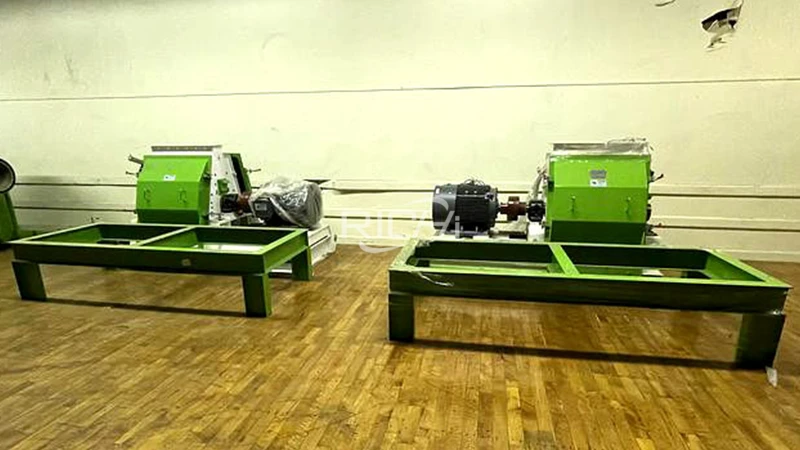
Sawdust Crusher Machine for Hungary Wood Pellet Plant
The customer is a large-scale wood pellet fuel manufacturer in Hungary. Due to high capacity demand, they purchased a wood hammer mill with 3–4 t/h output for parallel operation. It processes large volumes of wood raw materials and greatly improves the efficiency of feeding, grinding and discharging.
The customer also installed a complete spark detection & extinguishing system and pulse bag dust collector to meet safety and environmental requirements.
←
→
Technical Specification
| Model | SFSP56*40 | SFSP66*60 | SFSP66*80 | SFSP66*100 | SFSP66*120 | SFSP66*150 | |
| Rotor Dia. (mm) | 560 | 660 | 660 | 660 | 660 | 660 | |
| Crushing Chamber Width (mm) | 400 | 600 | 800 | 1000 | 1200 | 1500 | |
| Rotating Speed (rpm) | 2980 | 2980 | 2980 | 2980 | 2980 | 2980 | |
| Line Speed of Hammers (m/s) | 88 | 103 | 103 | 103 | 103 | 103 | |
| Power (kw) | 37 | 55 | 90 | 132 | 185 | 220 | 220 |
| Capacity(T/H) | 0.5-0.6 | 1.0-1.2 | 2.0-2.5 | 3.0-4.0 | 4.0-5.0 | 5.0-6.0 | 7.0-8.0 |
Because RICHI’s technology is constantly being updated and iterated, we will continuously upgrade and innovate our equipment. Therefore, the specific equipment parameters are subject to the actual quotation. We will provide more professional customized design and production services for each customer.
additional pretreatment equipment
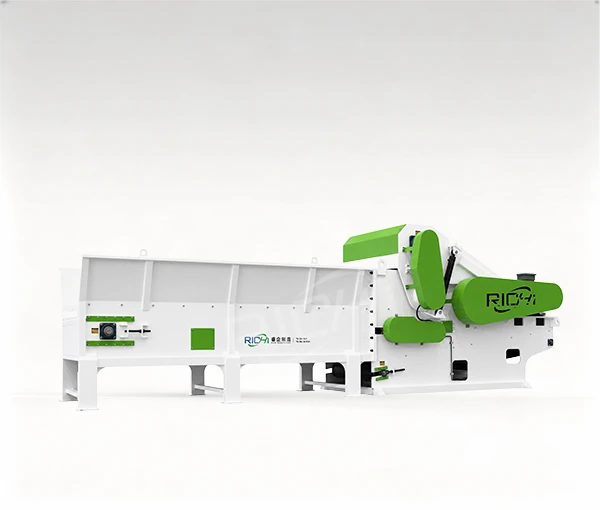
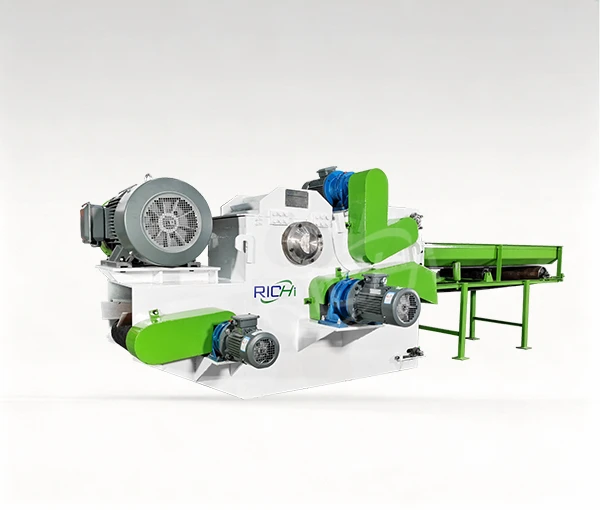
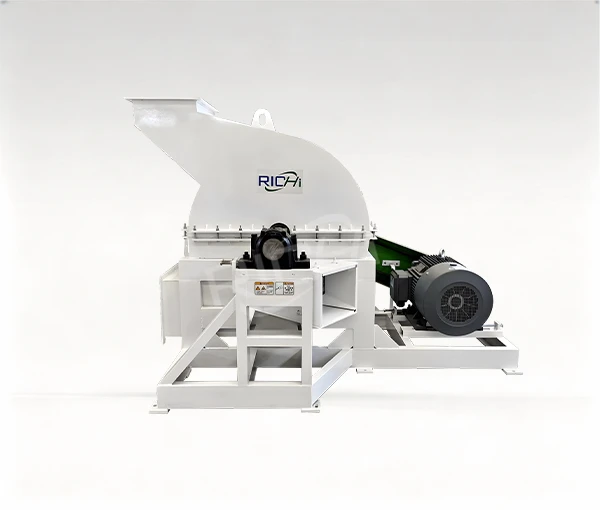
Wood waste comes in complex forms with varying sizes and moisture content, making it unsuitable for direct processing in a wood pulverizer. We flexibly configure auxiliary equipment—such as pallet crushers, drum chippers, and dryers—based on the specific characteristics of the client’s raw materials. For instance, wood pallets containing nails are pre-processed by a pallet crusher; long branches and thick slabs are reduced to small chips by a drum chipper; and damp wood is dehydrated in a dryer before being fed into the pulverizer for fine grinding.

FAQ
Shredding wood chips generates a large amount of wood dust; do you have a way to control it that meets environmental inspection standards?
→
We can provide a system combining a pulse-jet bag filter and a cyclone separator to collect wood dust generated during the grinding process. This prevents dust leakage, significantly reduces airborne dust in the workshop, and ensures compliance with environmental emission standards.
Is there a risk of wood chips ejecting from the feed inlet and injuring personnel during operation?
→
Our wood chip grinder is equipped with a forced-feeding impeller that creates a material barrier. Additionally, the housing features an anti-kickback deflector and a safety-interlocked maintenance door to prevent material from flying upwards, thereby ensuring operator safety.
Wood dust poses an explosion risk; can the sawdust hammer mill be equipped with protective measures?
→
You can choose to install a spark detection and suppression system. This system monitors for sparks within the ductwork in real time; upon detection, it immediately sprays water to extinguish them, preventing the ignition source from entering the storage silo or dust collection equipment and thereby mitigating the risk of dust combustion and explosion.
Is your sawdust crushing machine noisy?
→
The equipment features a vibration-dampening base and optimized rotor dynamic balance to reduce vibration and noise.
Are there safety measures in place when inspecting or replacing hammer blades and screens?
→
The access door is equipped with a safety interlock that automatically cuts off power when the door is opened; an emergency stop button comes standard to prevent accidental startup.
Could the presence of iron nails or metal debris in the raw materials trigger a fire or damage the equipment?
→
It is recommended to install an iron removal device at the material inlet to extract metal impurities beforehand, thereby protecting the hammer blades and screens. Additionally, a spark detection system can monitor for sparks caused by metal impacts and eliminate potential fire hazards.
What is your warranty service like?
→
We provide a one-year warranty on the entire machine, as well as installation guidance, operational training, a supply of wear parts, and support via remote guidance or on-site repair. (view our YouTube)