Poultry Feed Plant Price
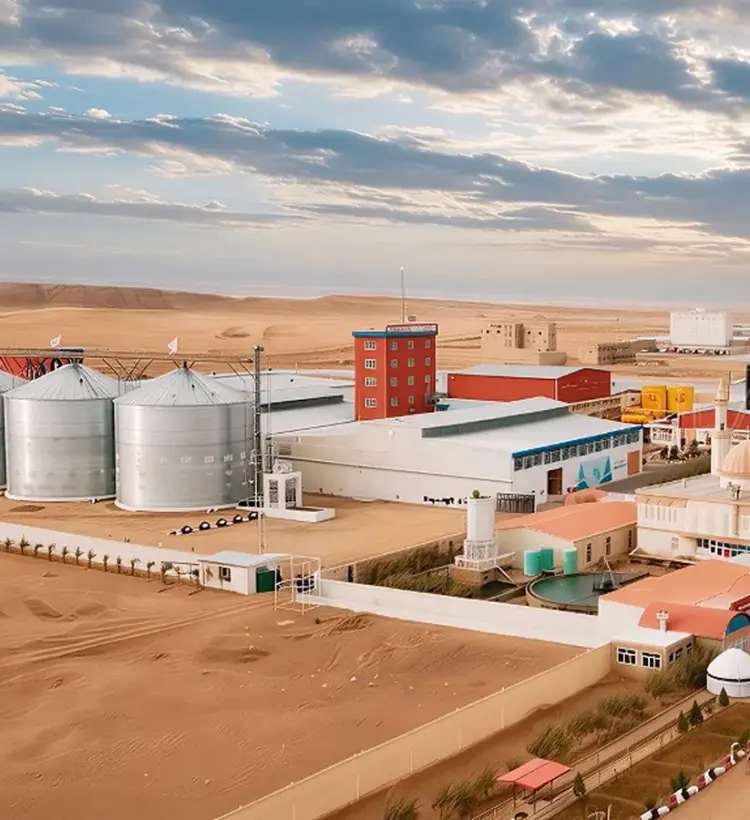
Want to build a poultry feed processing plant? RICHI delivers customized turnkey solutions (1-100 T/H). Produce premium mash, pellets, and crumbles with a budget ranging from $13,000 to $2,800,000.
poultry feed plant Price Overview
Poultry feed manufacturing plant cost depends on factors such as production capacity, feed type, automation level, plant layout, and equipment configuration. The figures below are reference ranges for turnkey poultry feed plants from 1 to 100 T/H, capable of producing mash, pellets, and crumbles.. After evaluating your production capacity requirements, product types, site conditions, and automation needs, we will provide you with a final quotation.
Reference investment ranges
1-2 T/H
Small-scale poultry feed mill for startups and small farms. Produces high-quality mash and pellets.

Price : $13,500 USD ~ $60,000 USD
3-4 T/H
Cost-effective solution for commercical feed mills.
Price : $60,000 USD ~ $200,000 USD
5-6 T/H
Medium capacity poultry feed production line; ideal for commercical feed mill.
Price : $80,000 USD ~ $ 250,000USD
8-10 T/H
Enhanced automation for stable daily output. Suitable for regional poultry feed supply.
Price : $150,000 USD ~ $320,000 USD
15-20 T/H
Large-scale production line with silos, conveying, and automated control systems.
Price : $240,000 USD ~ $600,000 USD
30-40 T/H
High-efficiency line designed for commercial feed manufacturers.
Price : $600,000 USD ~ $800,000 USD
50-60 T/H
Highly automated control, a complex of large-scale steel silos, and high-capacity, efficient pelletizing equipment
Price : $900,000 USD ~ $1,400,000 USD
80-100 T/H
Top-tier capacity with comprehensive automation. The ultimate choice for industry leaders.
Price : $1,800,000 USD ~ $2,800,000 USD
poultry feed mill project Videos
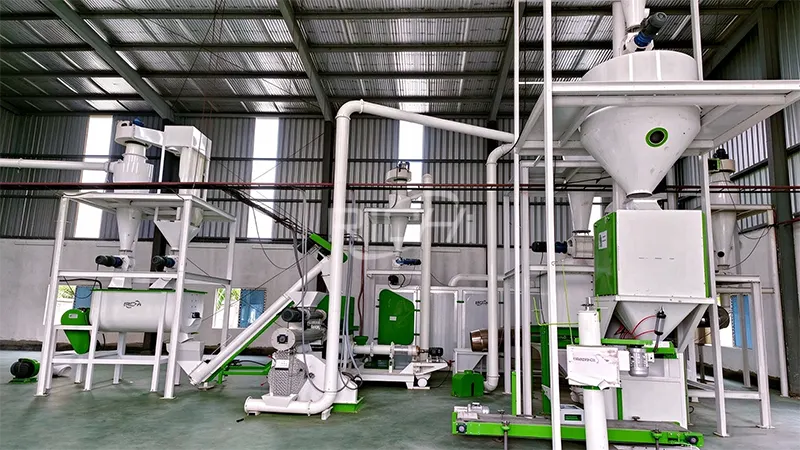
1-2 T/H Chicken Feed Manufacturing Plant in Bangladesh
- Product Requirement:chicken feed pellets + fish feed pellets
- Automatic Level:electronically controlled production line
- Equipment Configuration:hammer mill, feed mixer, chicken feed pellet making machine, dry type fish feed extruder, belt dryer, spraing machine, pellet cooler, screening machine, packing machine
- Plant Layout:U-shaped production line layout
- Price:$85,960 USD

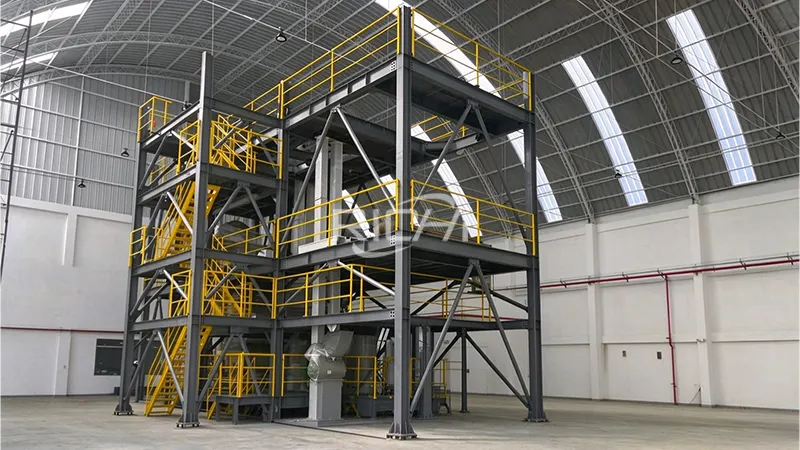
5-6 T/H Poultry Feed Mill Plant in Peru
- Product Requirement:mash feed, feed pellets (2–4 mm in diameter), and crumbles
- Automatic Level:PLC-controlled production line
- Equipment Configuration:PLC batching system, hammer mill, mixing machine, pellet machine, pellet cooler, crumble machine, screening machine, packing machine.
- Plant Layout:multi-story steel-frame structure;raw material unloading pit
- Price: $23,300 USD
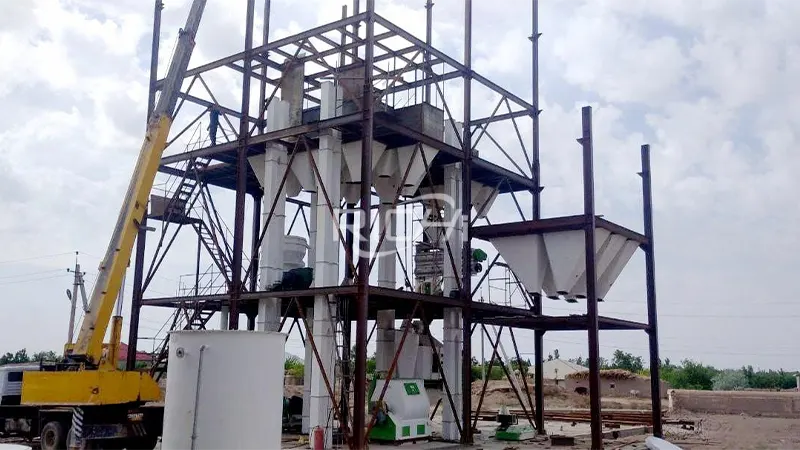
10 T/H Chicken Feed Plant in Uzbeskitan
- Product Requirement:1-1.5mm crumbles and 2-4 mm chicken feed pellets
- Automatic Level:PLC-controlled production line
- Equipment Configuration:multi-bin batching system, feed ginder, feed mixer, pellet machine, pellet cooler, crumble machine, screening machine, packing machine.
- Plant Layout:multi-story steel-frame structure; standalone silos; separate finished-product area
- Price: $289,400 USD
Global poultry feed Plant projects
With its comprehensive turnkey solutions, RICHI Manufacture has helped numerous clients worldwide establish modern poultry feed plants. The following selected case studies offer a clear look at how we assist clients of various scales in the design of their feed plants.
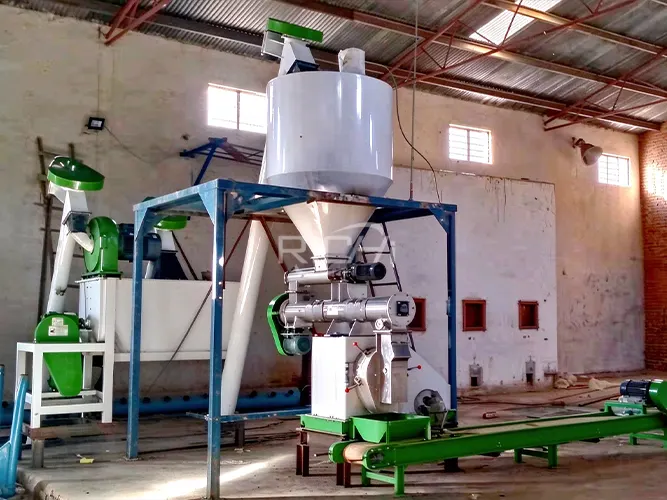
1 T/H Small Chicken Feed Plant in Kenya
- Product Requirement:feed pellets for chicken and duck
- Equipment Configuration:mixing machine, small chicken feed pellet machine, cooling belt.
- Plant Layout:single-story horizontal flow layout; no pit
- Price: $13,010 USD
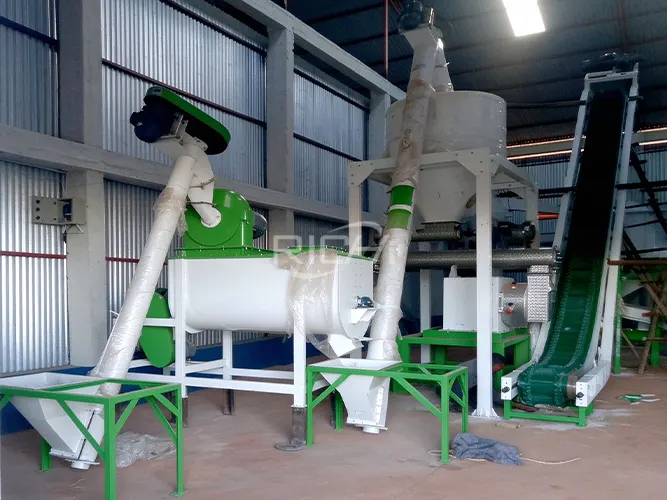
1-2 T/H Small Chicken Feed Mill in Mexico
- Product Requirement:1-1.5 mm crumbles and 2-4 mm feed pellets
- Equipment Configuration:feed ginder and mixer, chicken feed pellet machine, counterflow pellet cooler, vibrate screening machine, packing machine.
- Plant Layout:single-story horizontal flow layout; no pit.
- Price: $50,390 USD
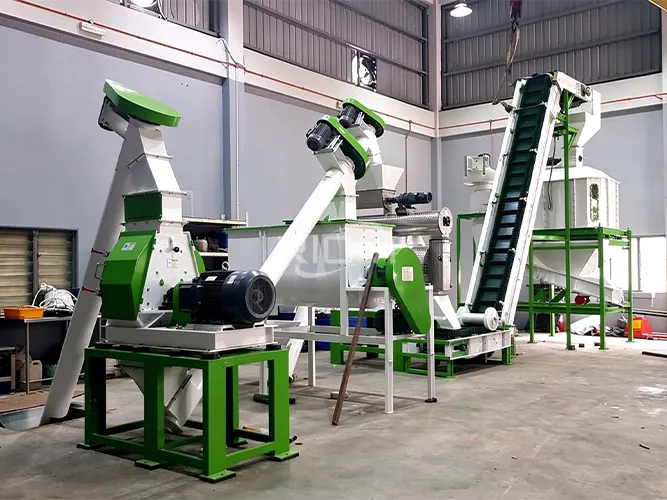
3-4 T/H poultry feed mill plant Malaysia
- Product Requirement:mash feed and feed pellets for broilers and layers
- Equipment Configuration:poultry feed grinder, poultry feed mixer, poultry feed pellet machine, pellet cooler, screening machine.
- Plant Layout:single-story horizontal flow layout; requires excavation for a raw-material intake pit.
- Price: $60,180 USD
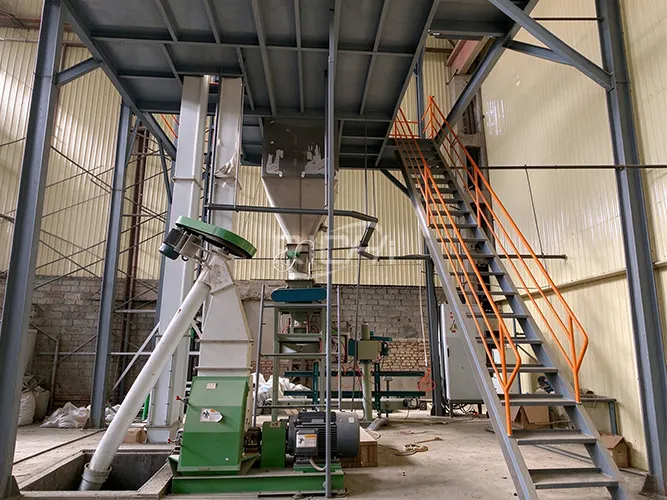
5-6 T/H Poultry Mash Feed Plant in Kyrgyzstan
- Product Requirement:mash feed for chickens, dusks and geese
- Equipment Configuration:iron remover, feed hammer mill, powder pre-cleaning machine, feed mixer machine, feed bagging machine, bag sewing machine
- Plant Layout:two-story steel-frame structure; requires excavation for a raw-material intake pit.
- Price: $ 18,310 USD
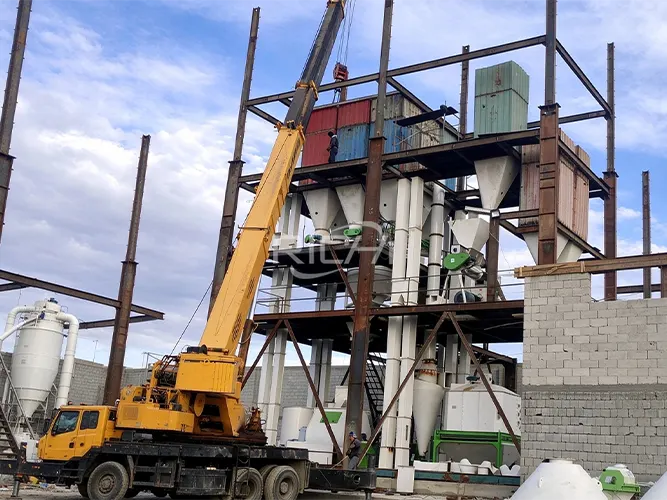
10 T/H Poultry Feed Processing Plant in Uzbekistan
- Product Requirement:feed pellets for chickens, ducks and geese
- Equipment Configuration:multi-bin batching system (PLC-controlled), feed hammer mill, feed mixer machine, pellet machine, pellet cooler, feed crumble machine, screening machine, automatic packaging machine
- Plant Layout:four-story steel-frame structure; standalone large silos
- Price: $28,860 USD
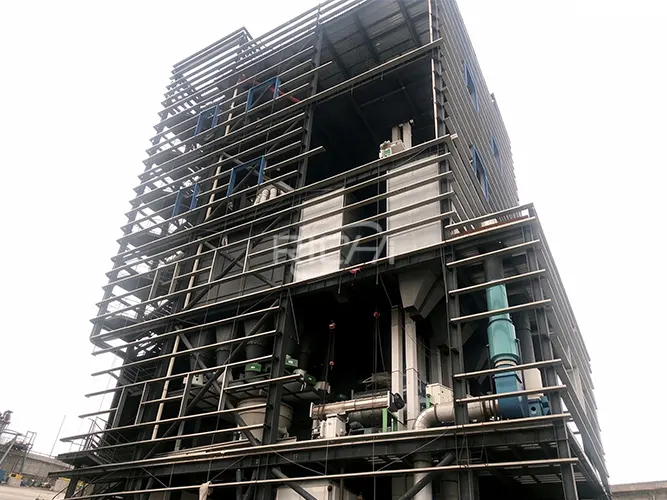
20 T/H Feed Mill for Poultry and Fish in Algeria
- Product Requirement:feed pellets for poultry and fish
- Equipment Configuration:multi-bin batching system (PLC-controlled), feed hammer mill, feed mixer machine, poultry feed pellet machine, fish feed pellet making machine, pellet cooler, feed crumble machine, screening machine, automatic packaging machine
- Plant Layout:tower layout; standalone silo group
- Price: $481,520 USD
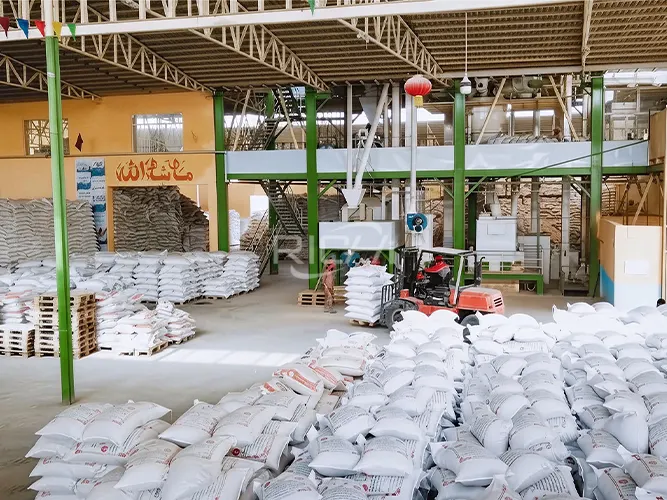
30 T/H Chicken Feed Manufacturing Plant in Afghanistan
- Product Requirement:feed for chicks, broilers, and laying hens
- Equipment Configuration:multi-bin batching system (PLC-controlled), feed hammer mill, feed mixer machine, poultry feed pellet machine, fish feed pellet making machine, pellet cooler, feed crumble machine, screening machine, automatic packaging machine
- Plant Layout:zoned layout; standalone large silos;standalone finished goods warehouse
- Price: $630,030 USD
poultry feed mill layout design
Below are several process poultry feed manufacturing process flow charts, each designed for a different type of poultry feed mill. Poultry feed mill designs vary based on factors such as production capacity, requirements for the finished product, and facility conditions.
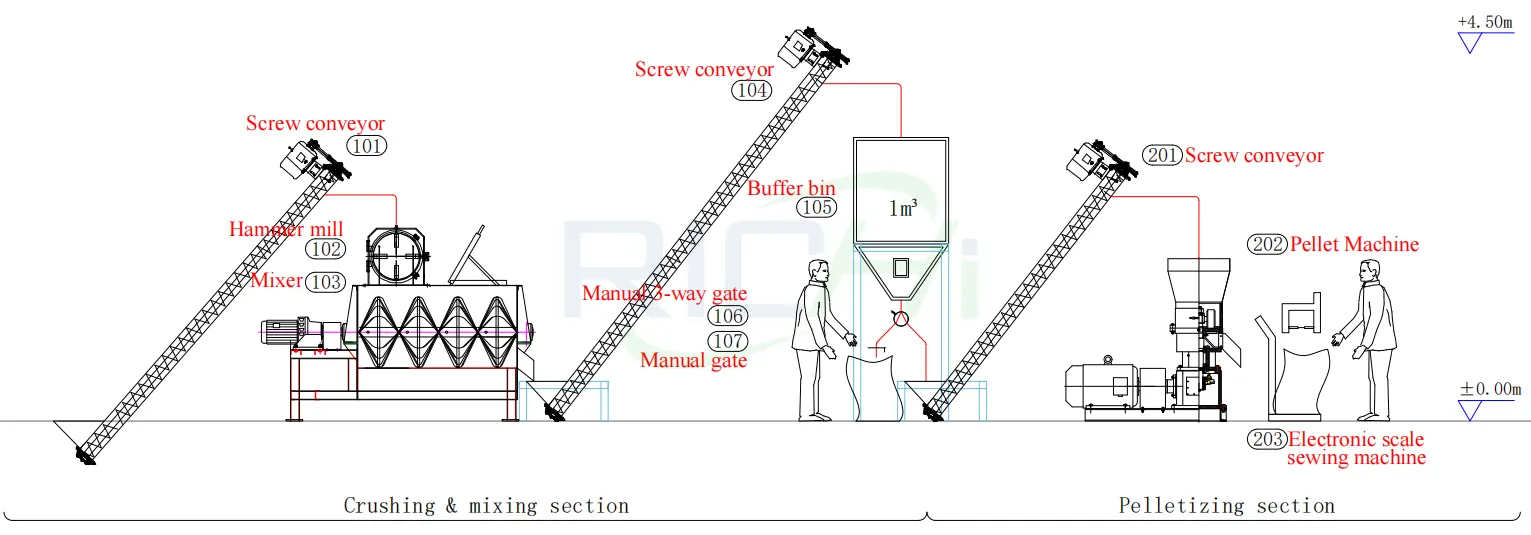
1T/H Mash+0.2T/H Pellet Production Line
This poultry feed production line consists of two core sections: the mash processing section and the pelletizing section.
First, raw materials are weighed and proportioned according to a specific formula, then fed into a grinder to be processed into a powder. The ground materials are subsequently transferred to a mixer, where they are blended thoroughly. The resulting mash can either be packaged directly or routed to the pelletizing section.
1-2T/H Poultry Feed Manufacturing Plant
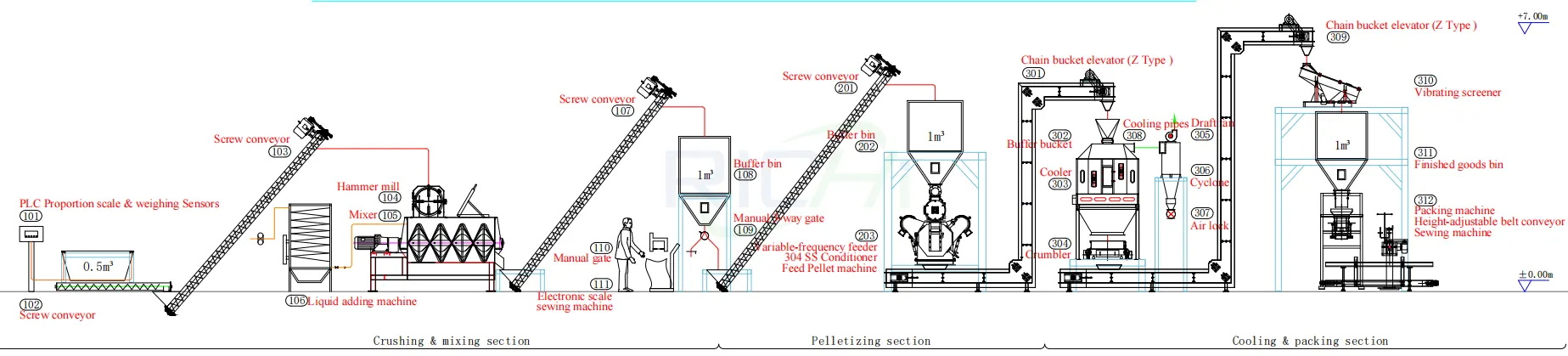
This is a standard poultry feed production line capable of producing mash, pellets, and crumbles. Compared to flat-die granulation, this method yields higher-quality pellets and offers greater production capacity.
The complete line is equipped with a batching scale, grinder, mixer, liquid addition tank, pellet mill, cooler, crumbler, screener, and bagging scale.
5-6T/H Poultry Feed Plant with Silos
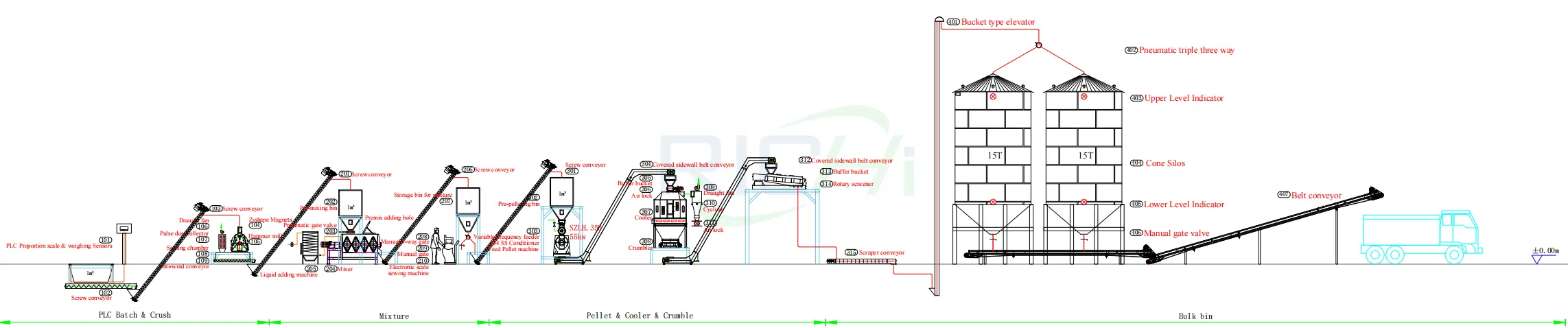
This feed mill is designed specifically for large-scale poultry farms to produce various types of chicken feed on-site.
The poultry feed mill design highlight is the inclusion of two large, independent silos for storing finished products. The discharge outlets at the bottom of these silos are connected to a belt conveyor, allowing trucks to park directly beneath the conveyor to receive the material.

10T/H PLC Poultry Feed Processing Plant
The production facility stands 12m tall and features a multi-level steel-frame structure, incorporating a 3-meter-deep pit for receiving raw materials.
The proportioning section is equipped with six raw material silos and utilizes a PLC-based computer control system; this enables precise, multi-component blending of various ingredients, ensuring the scientific integrity and consistency of the feed formulations.
10T/H Poultry Mash Feed Plant
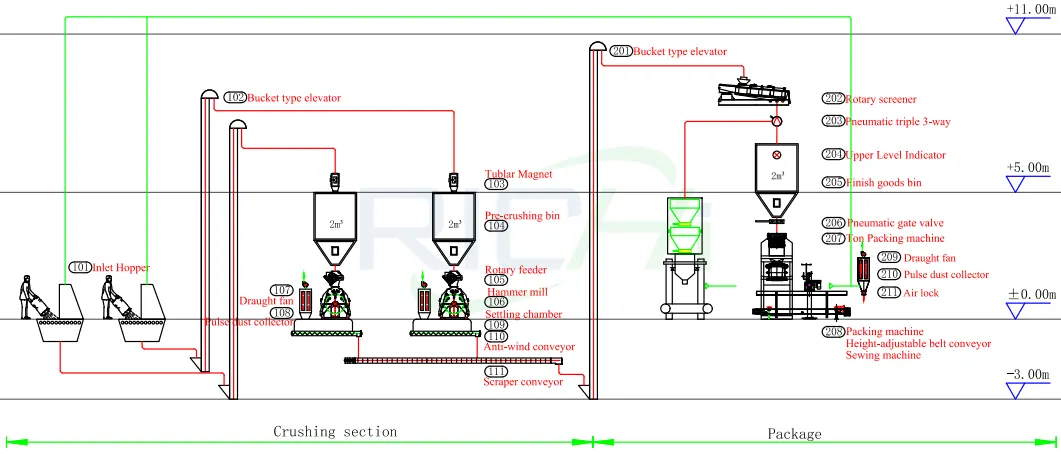
The design of this mash feed plant centers on high efficiency, dust removal, and environmental protection, featuring a process configuration that utilizes two crushers operating in parallel. The entire production line is divided into a crushing section and a packaging section.
The factory features a multi-story steel structure design and requires an excavated pit for receiving raw materials.
poultry feed Plant Machinery
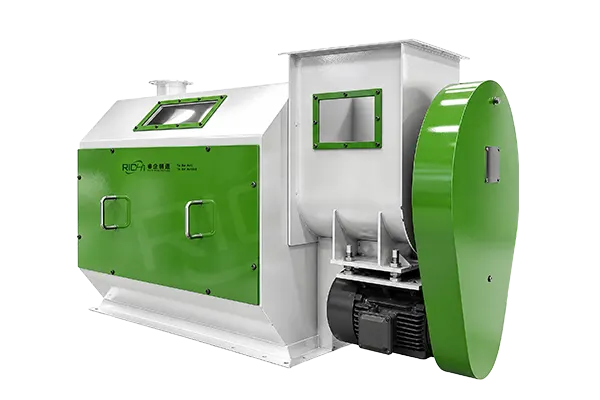
Cylindrical Cleaning Machine
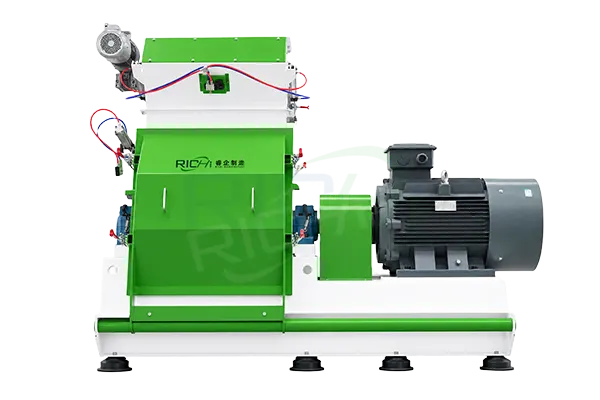
Poultry Feed Grinder Machine
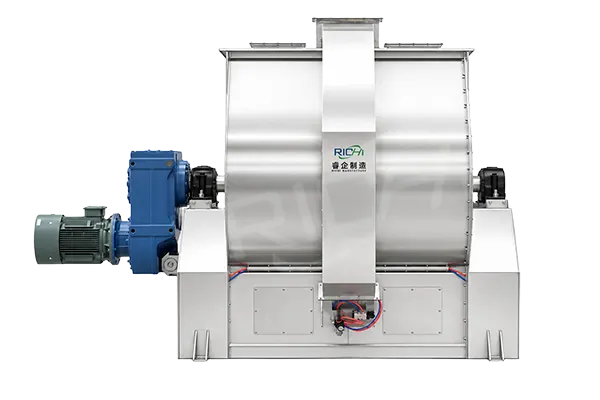
poultry feed Mixer machine
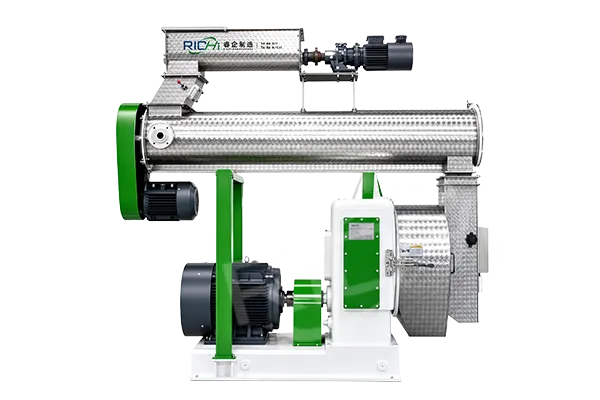
poultry feed pellet machine
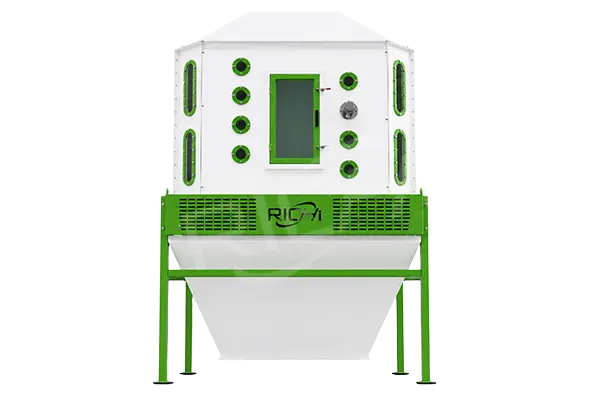
Counterflow Pellet Cooler
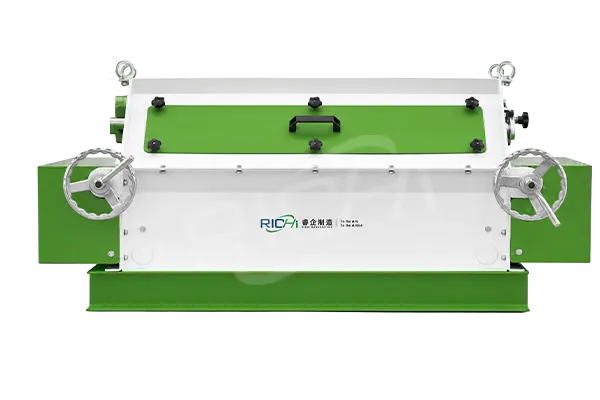
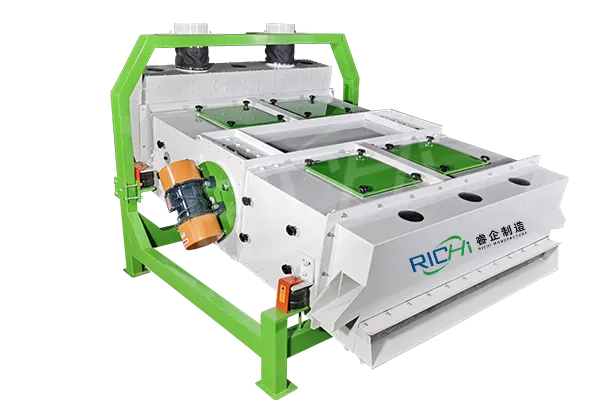
Vibrating Screening Machine
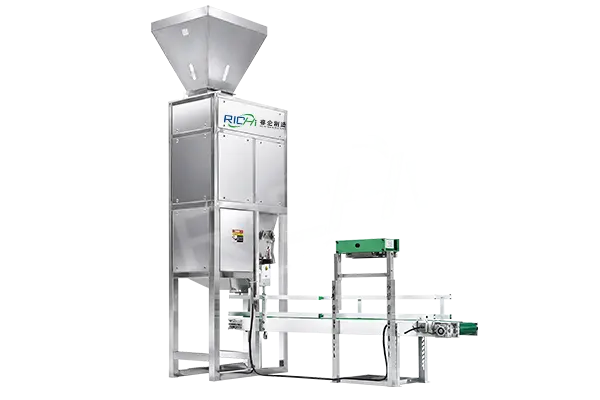
What affects poultry feed plant cost
Poultry feed factory cost depends on factors such as production capacity, equipment configuration, level of automation, facility construction, and installation requirements. Tell us your requirements, we will prepare a tailored turnkey proposal with equipment list, layout plan, and investment estimate.

1.
Production Capacity
The scale of production determines equipment specifications and the baseline investment for the entire production line. Whether the capacity is 1 ton, 5 tons, or over 10 tons per hour, the specifications for crushers, mixers, pellet machines, coolers, and conveying systems will differ significantly.
2.
Product Type
Different products require different processes. If you only produce mash feed for laying hens, you may only need crushers and mixers. If you also produce pellets and crumble feed for chicks, you will need pelleting, cooling, crumbling, and screening systems.
3.
Automation Level
A higher degree of automation entails greater initial investment in the production line, but it leads to lower long-term labor costs and more consistent execution of formulations.
4.
Equipment Quality
Differences in the materials used for main equipment—such as pellet machines, mixers, and crushers—directly affect both price and service life. This is especially true for components within a granulation system, including the ring die, rollers, conditioner, and main shaft.
5.
Dust removal and environmental protection equipment
In feed mills, dust is primarily concentrated during the stages of ingredient intake, grinding, mixing, cooling, and bagging. The more stringent the environmental requirements, the greater the investment needed for dust collection systems.
6.
Poulutry Feed Mill Layout
Different factory layouts impose varying requirements on civil engineering and construction. For instance, whether a feed mill utilizes a multi-story steel-frame structure or a horizontal layout—and whether the excavation of pits is required—will influence the civil engineering plan. Constructing a new facility entails significant costs for civil works and steel structures, whereas retrofitting an existing plant may involve spatial reconfiguration, foundation reinforcement, and the modification of utility lines.
7.
Delivery method
Are you looking to purchase individual machines, or an entire poultry feed production line? Do you require a turnkey project? While a turnkey project entails a higher initial investment, it reduces coordination efforts for the client and ensures a more reliable project implementation.
FAQ
I would like to set up a small-scale chicken feed mill; how much would it cost?
→
A small-scale poultry feed mill typically has a production capacity of less than 2 tons per hour. The cost depends primarily on the production process and the equipment configuration. You may refer to the following price estimates:
- Complete flat-die pelletizing production line
- 1 T/H mash feed + 0.2-0.3 T/H pellet feed
- 1 T/H mash feed + 0.5-0.6 T/H pellet feed
- 1 T/H mash feed + 0.8-1.0 T/H pellet feed
- Complete ring-die pelletizing production line
- 1-2 tons per hour: $30,000 $USD ~ $60,000 USD
Why are fully automated poultry feed plants more expensive than semi-automated production lines?
→
Fully automated poultry feed processing plants typically require the integration of PLC control systems, automatic batching equipment, and centralized monitoring systems; consequently, the initial investment is generally higher than that for simpler, semi-automated production lines. However, automated equipment reduces the need for manual intervention and enhances consistency throughout the batching and production processes.
What are the common layouts for poultry feed factories?
→
Poultry feed mill layouts include single-story, multi-story vertical, tower-style, zoned, and modular configurations.
- Single-Story Layout: A single-level floor layout involves placing all equipment on the same floor, with various production stages connected by conveyors, lifts, or other transport mechanisms.
- Multi-Story Vertical Layout:A multi-story vertical layout organizes different production processes across various floors, utilizing lifts and gravity-fed conveyors to facilitate material flow, thereby reducing the overall footprint.
- Tower Layout:A tower-style layout is suitable for medium-to-large-scale commercial poultry feed mills, as it allows for the centralized planning of raw material storage and processing systems.
- Zoned Layout: A zoned layout organizes a factory into distinct areas based on production functions—for example, raw material receiving, raw material storage, processing, granulation, finished product packaging, finished product warehousing, and auxiliary facilities.
- Modular Layout: Modular layout involves dividing a production line into several relatively independent equipment modules based on their functions, which are then configured according to the conditions of the factory facility.
How can I design a feed production line to manufacture chicken feed, pig feed, and fish feed in one factory?
→
You can utilize a shared raw material pre-treatment system while employing specialized pelletizing equipment tailored to different types of feed. For chicken and pig feed, a pellet mill can be used to produce pelleted feed; for fish feed, an extruder can be employed, supplemented by drying and coating equipment.
What processes are included in a complete poultry feed production line?
→
A complete poultry feed production line is typically capable of producing mash, pellets, and crumbles. The main processes include batching, grinding, mixing, pelletizing, cooling, crumbling, screening, and packaging.(view our YouTube)