Poultry Feed Pellet Machine Price
Explore competitive poultry feed pellet machine price options with stable performance, customizable capacity, and efficient pelletizing solutions for poultry feed production.
Poultry Feed Pellet Machine Price Overview
A poultry feed pellet machine price generally ranges from a few thousand to tens of thousands of US dollars, depending on capacity, configuration, and production scale.
As a rough reference:
- Small-scale poultry feed pellet machine price: USD 7,000 – 15,000
- Medium commercial poultry feed pellet machine price: USD 15,000 – 50,000
- Large-capacity industrial poultry feed pellet machine price: USD 50,000 – 100,000+
However, these figures are only indicative. To understand the real cost, it’s essential to look at specific models and technical parameters.
Poultry Feed Pellet Machine Price for Different Models
Below are RICHI SZLH series poultry feed pellet machine price, along with the main specifications.
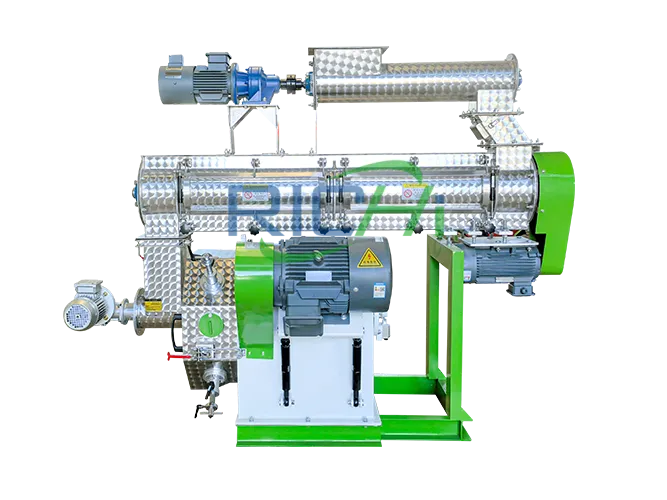
SZLH250 Poultry Feed Pellet Machine
- Capacity: 1.0–1.5 T/H
- Main Motor Power: 22 kw
- Price: $7,000–&9,500
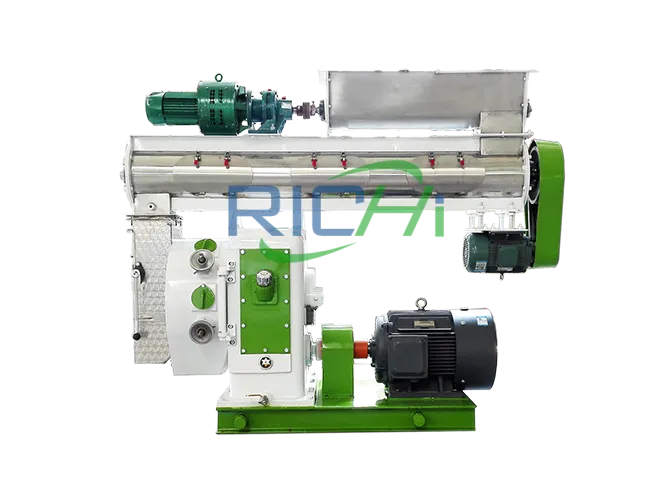
SZLH320 Poultry Pellet Machine
- Capacity: 3–4 T/H
- Main Motor Power: 37 kw
- Price: $13,000–&17,000
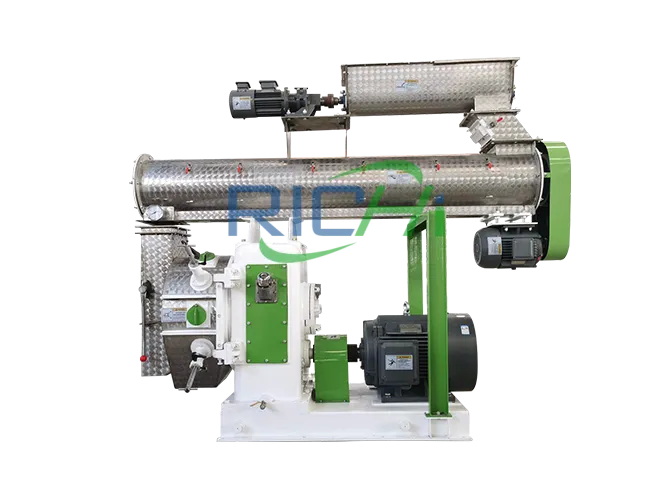
SZLH350 Poultry Feed Pellet Machine
- Capacity: 5–6 T/H
- Main Motor Power: 55 kw
- Price: $18,000–&25,000
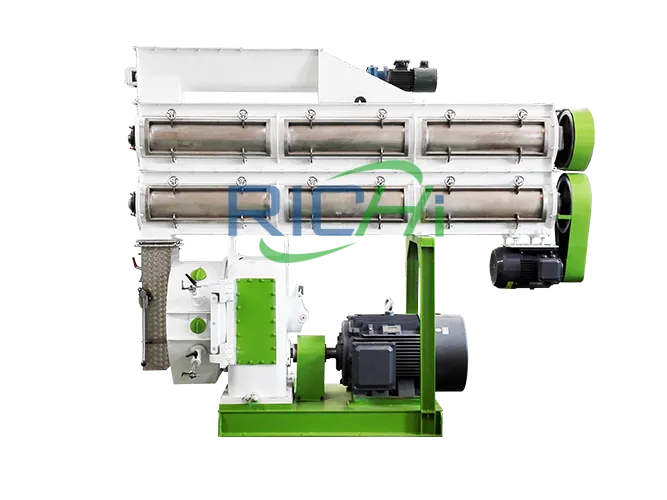
SZLH420 Poultry Pellet Making Machine
- Capacity: 10–12 T/H
- Main Motor Power: 110 kw
- Price: $23,000–&32,000
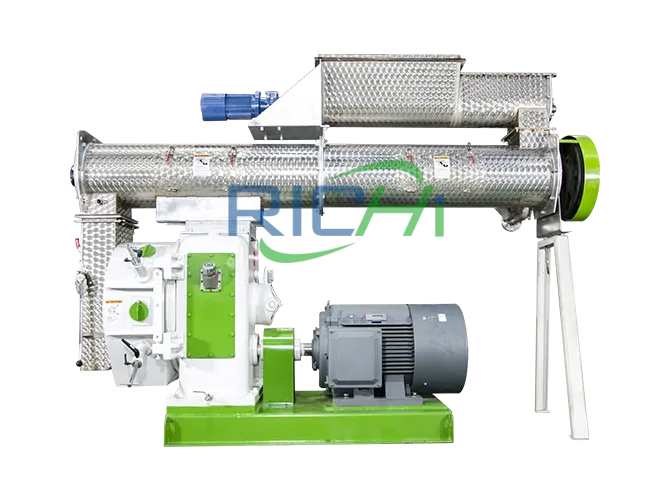
SZLH508 Poultry Pellet Machine
- Capacity: 15–16 T/H
- Main Motor Power: 160 kw
- Price: $32,000–&45,000
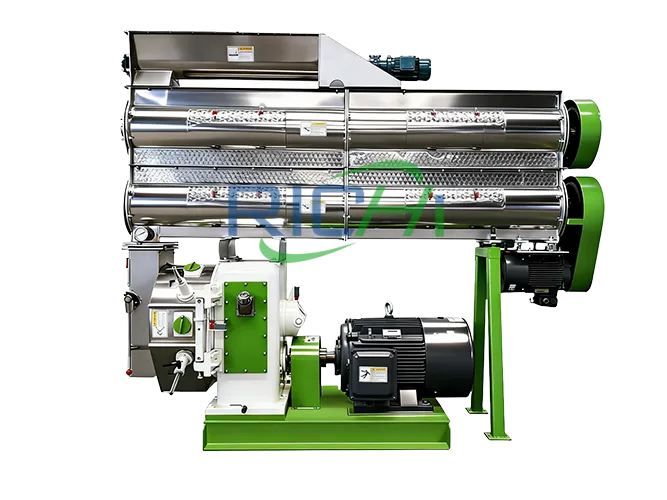
SZLH558 Poultry Pellet Making Machine
- Capacity: 20–22 T/H
- Main Motor Power: 185 kw
- Price: $40,000–&53,000
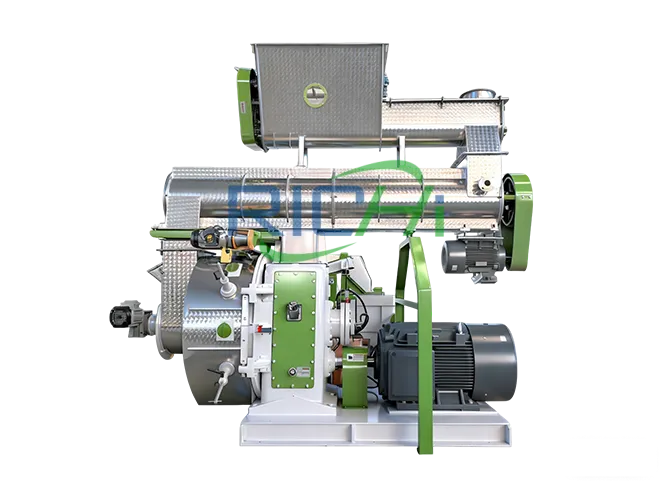
SZLH678 Poultry Feed Pellet Machine
- Capacity: 30–33 T/H
- Main Motor Power: 185 kw
- Price: $60,000–&75,000
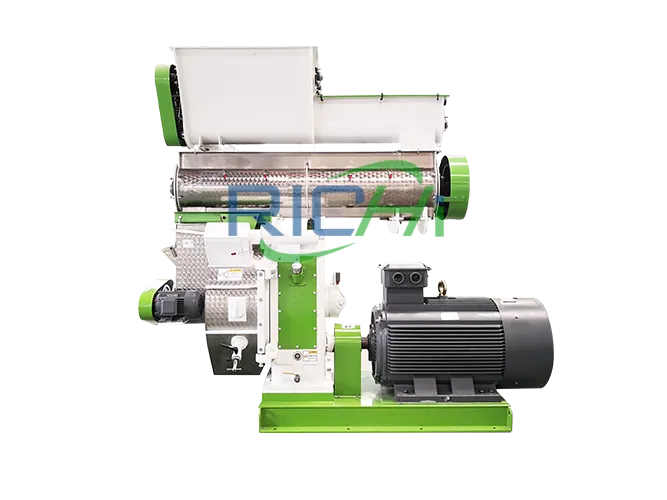
SZLH768 Poultry Feed Pellet Machine
- Capacity: 38–40 T/H
- Main Motor Power: 185 kw
- Price: $80,000–&100,000
| Model | SZLH-250 | SZLH-320 | SZLH-350 | SZLH-420 | SZLH-508 | SZLH-558 | SZLH-678 | SZLH-768 |
| Capacity(T/H) | 1-1.5 | 3-4 | 5-6 | 10-12 | 15-16 | 20-22 | 30-33 | 38-40 |
| Main Motor Power(kW) | 22 | 37 | 55 | 110 | 160 | 185 | 250 | 315 |
| Feeder Power(kW) | 1.1 | 1.5 | 1.5 | 1.5 | 1.5 | 1.5 | 1.5 | 2.2 |
| Conditioner Power(kW) | 1.5 | 4 | 4 | 7.5 | 7.5 | 11 | 11 | 11 |
| Ring Die Diameter(mm) | 250 | 320 | 350 | 420 | 508 | 558 | 673 | 762 |
| Pellet Diameter(mm) | 2-12 | |||||||
| Ring Die Material: 42 CrMo Stainless Steel Conditioner Pelletng Chamber Door’s: 6mm/SUS304 Gear Box: HT250 Gear and Gear Shaft: 42 CrMo Spindle: 42 CrMo Empty Shaft: 42 CrMo Bearings: SKF brand Main Motor: 4/6P Siemens motor | ||||||||
Why Poultry Feed Pellet Machine Prices Vary
Poultry feed pellet machine price is influenced by several factors, mainly including:
√
Production Capacity & Ring Die Aize
Production capacity directly determines the core configuration—higher output requires larger power and more robust structural design, driving up costs. Ring die size affects extrusion efficiency; larger, high-precision ring dies with more uniform apertures cost more, as they enhance pellet quality and production stability.
√
Gearbox & Motor Quality
The gearbox and motor are the power core of the machine. High-quality motors and gearboxes ensure stable operation and long service life, costing 20%-50% more than ordinary low-quality components.
√
Automation Level & Control System
Basic manual-operated machines are more affordable, while models with advanced automation (e.g., PLC control systems, frequency conversion speed regulation, and real-time production monitoring) reduce labor costs and improve precision.
√
Single Machine vs Complete Feed Production Line
A standalone poultry feed pellet machine is priced lower. Integrating the pellet machine into a complete production line (with mixers, coolers, crushers, and packaging equipment) requires matching auxiliary devices and system debugging, significantly increasing the total investment but improving overall production efficiency for large-scale enterprises.
Understanding these variables helps buyers avoid choosing equipment based on price alone, ensuring they select a model that balances cost, performance, and long-term operational needs.
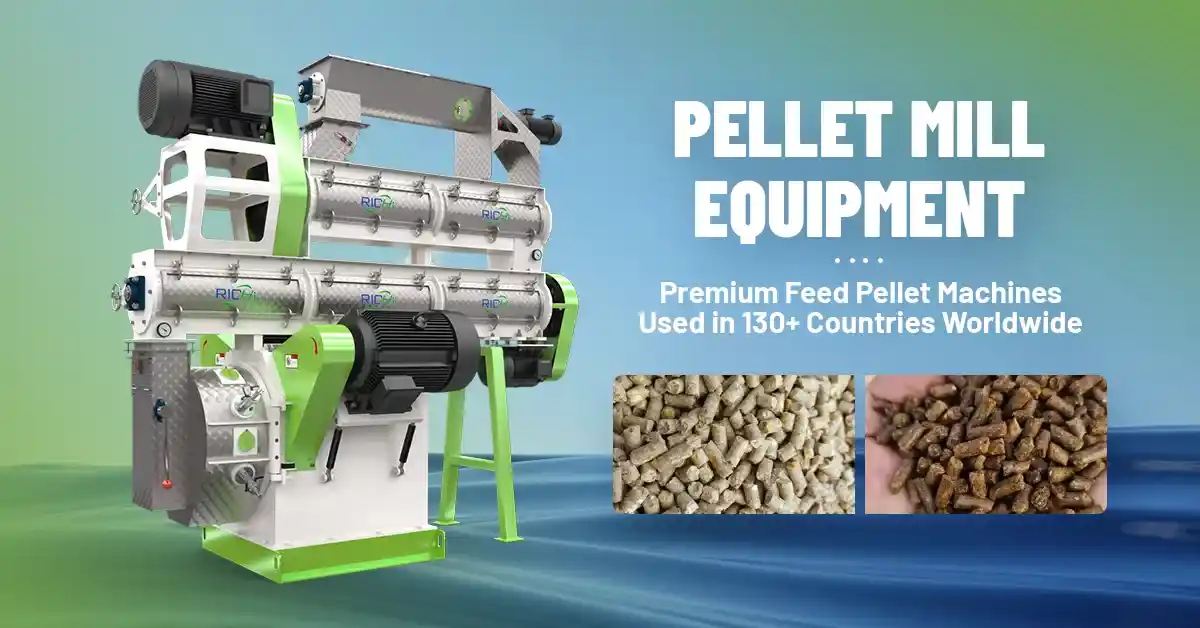

Hidden Pitfalls of Low Poultry Feed Pellet Machine Price
Low poultry feed pellet machine price may seem economical at first glance, but they often bring about substantial hidden costs and operational risks in long-term use, mainly manifested in the following aspects:
High die wear costs
Low-cost poultry feed pellet machine is usually equipped with dies made of inferior steel, whose hardness and wear resistance are far from industry standards. Dies wear out rapidly during production and need frequent replacement. The cumulative cost of die procurement over time will far exceed the initial price difference saved on the machine itself.
Excessive power consumption
The transmission systems and motor designs of such poultry pellet machines lack optimization, leading to low energy conversion efficiency. For the same production output, their power consumption can be 15% to 30% higher than that of standard, high-quality equipment.
Unstable pellet quality
Low-cost poultry pellet machines feature imprecise designs of conditioners and press rollers, which fail to ensure sufficient conditioning of feed raw materials and uniform extrusion. The produced pellets may suffer from uneven hardness and high powder rate, which may reduce the palatability and absorption efficiency of feed.
Frequent maintenance and unplanned downtime losses
Core components (such as gears and bearings) of these machines are mostly cheap accessories that are prone to malfunctions and require frequent disassembly and maintenance. Each maintenance session incurs both part and labor costs, and also causes production line downtime, interrupting feed supply. It can result in huge production losses.
Choosing a properly configured poultry feed pellet machine model—rather than simply the lowest price—can significantly improve feed quality, efficiency, and profitability over time. If you need a customized poultry feed pellet machine price based on your specific requirements, contacting a professional manufacturer — RICHI Machinery for a tailored solution is always the best next step.
How to Get an precise Price
To receive a precise quotation, manufacturers typically need the following information:
- Required output (kg/h or t/h)
- Poultry feed formula and raw materials
- Pellet diameter requirements
- Power supply and voltage standard
Providing these details ensures that the recommended solution meets your actual production needs.