
Wood Pellet Production Line in Romania
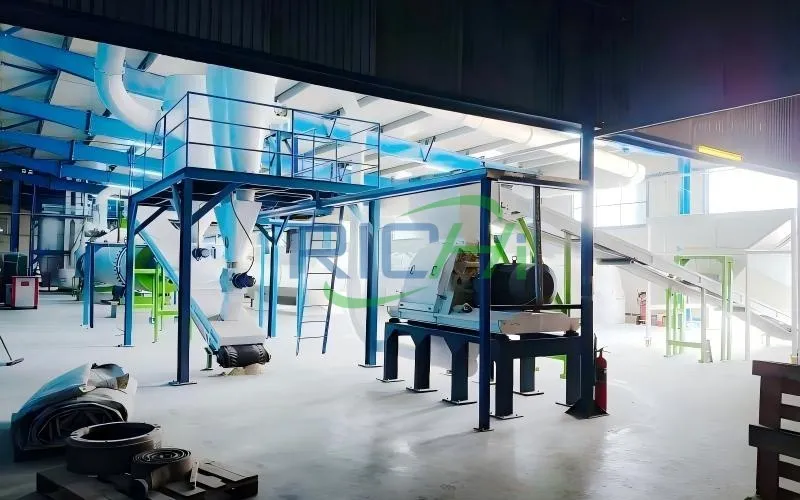
The wood pellet production line in Romania, designed by RICHI, integrates advanced processes, intelligent control, and eco-friendly features to deliver high-quality fuel pellets, supporting the scaling-up and modernization of local biomass clean energy industry.
Overview of Wood pellet Production Line in Romania
— Richi Machinery —
2-2.5 T/H
Capacity(tons/hour)
6-12 mm
Pellet Size(mm)
50 Days
Installation Period(days)
$228,000
Guide Price(USD)
Brief Introduction
As a country rich in forestry resources in Eastern Europe, Romania generates significant amounts of wood processing residues annually. Capitalizing on the growing EU demand for renewable energy, a local enterprise partnered with RICHI in August 2022 to establish a modern wood pellet production line in Romania
This wood pellet production line for the Romanian client utilizes locally abundant sawdust from sawmills and woodworking facilities as raw material, converting it into high-value biomass fuel to meet the region’s rising demand for clean energy.
- Capacity: 2-2.5 T/H
- Pellet Diameter: 6-12 mm wood fuel pellet
- Raw Materials: Beech sawdust, wood chips, forest waste branches, recycled furniture, formwork, wood shavings, and other wood processing residues
- Installation Period: 50 Days
Market Opportunity Analysis for wood pellet Production Line in Romania
Europe is a major global producer and consumer of wood pellets, backed by strong green policy incentives. Seizing this market opportunity to establish an efficient wood pellet production line—transforming piles of wood waste into stable thermal energy and a steady cash flow—is the most pragmatic choice for local business owners.
- Abundant Resources
- Romania has rich forest resources, with a stable and low-cost supply of wood processing by-products such as sawdust and wood shavings.
- Policy Incentives
- The EU’s carbon neutrality goals are driving demand for biomass energy, including wood pellets, which are widely used in heating, power generation, and other sectors.
- Strong Demand
- Industries in Central and Eastern Europe require stable heat sources, and wood pellets offer lower costs than natural gas. Romania’s push for “clean heating” further boosts the market potential for biomass heating.
- Financial Support
- Romania provides subsidies for biomass heating projects through the “Environmental Fund,” while rural energy renovation projects can access EU funding via the National Recovery and Resilience Plan (PNRR).
Romania wood pellet Production Line Highlights
This wood pellet production line was designed specifically for the Romanian market, incorporating flexibility, intelligence, and compliance to unlock the potential for efficient wood pellet production.
Key Equipment of wood pellet Production Line in Romania
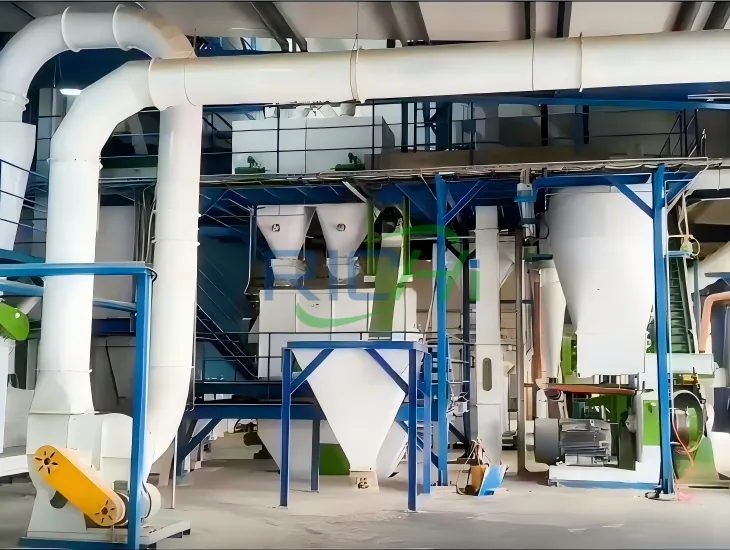
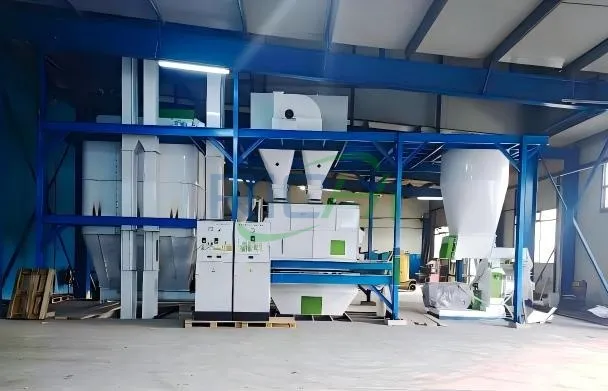
This wood pellet production line in Romania is equipped with equipment covering the entire process, including raw material cleaning, crushing, drying, granulation, cooling, and packaging. It is also equipped with auxiliary equipment such as iron remover, air cannon, pulse dust collector, cyclone, air compressor, and storage silo.
| Main Machine | Model | Application in Wood Pellet Production Line in Romania |
|---|---|---|
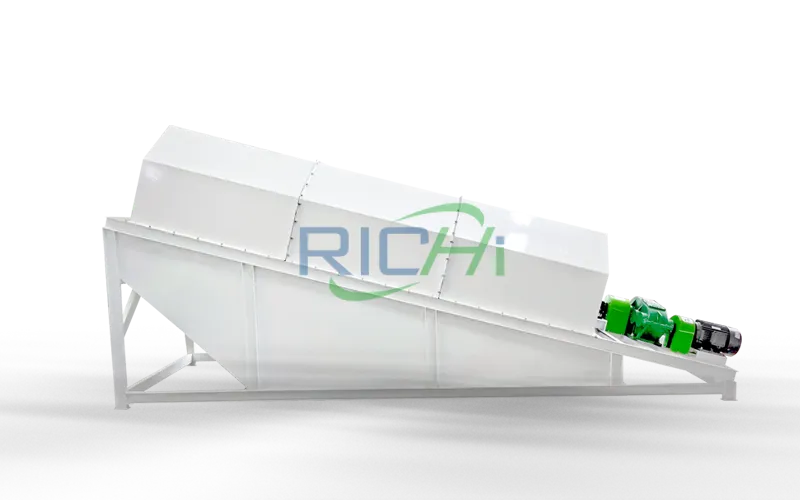
| Rotary Screen Separator | GTS1-2*2 | Removing impurities from beech sawdust |
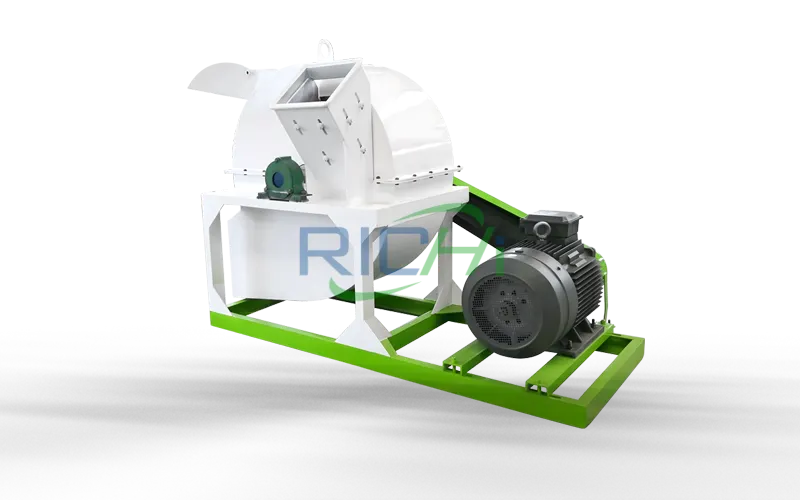
| Multiple Wood Chip Crusher | RI-1000 | Chipping and crushing the raw materials |
| Wood Drum Dryer | 1.5m×1.5m | Removing moisture from wood raw materials |
| Wood Pellet Mill | MZLH-520 (132kW) | Turning powdery wood materials into dense pellets |
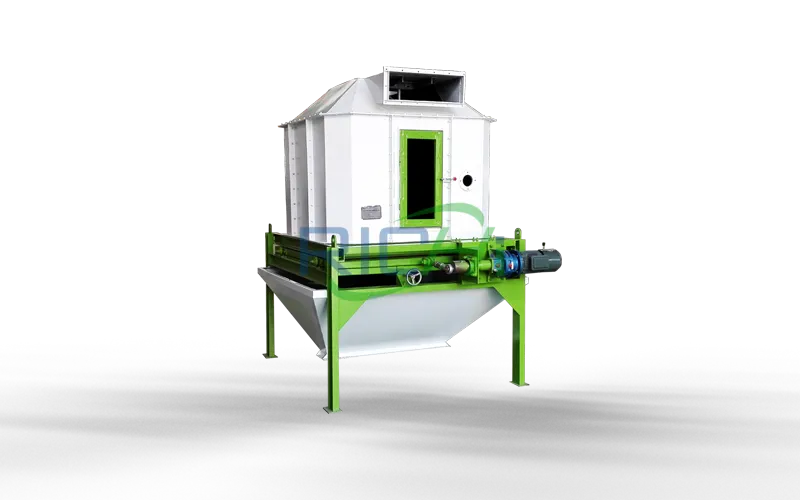
| Counterflow Pellet Cooler | SKLN14*14 | Cooling down the pellets |
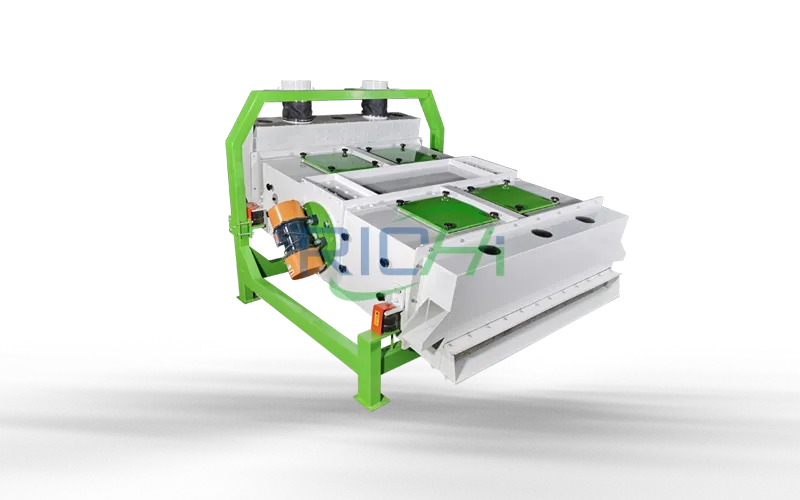
| Vibrating Grading Screen | SFJZ series | Screening finished pellets |
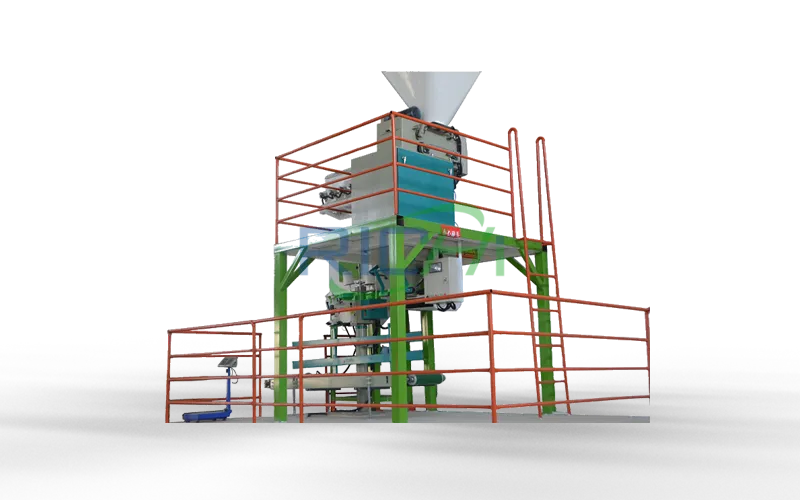
| Packing Machine | DCS-50FB | Weighing and packing the finished pellets |
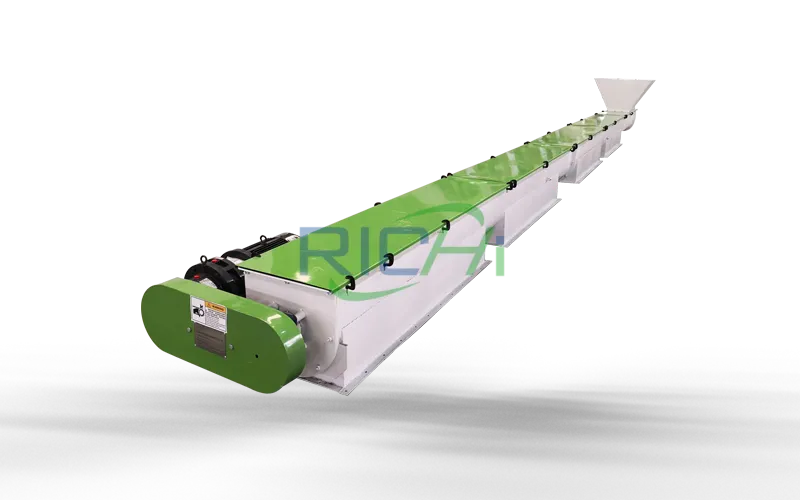
| U-shaped Screw Conveyor | TLSSU-32 | Conveying the materials to the next stage |
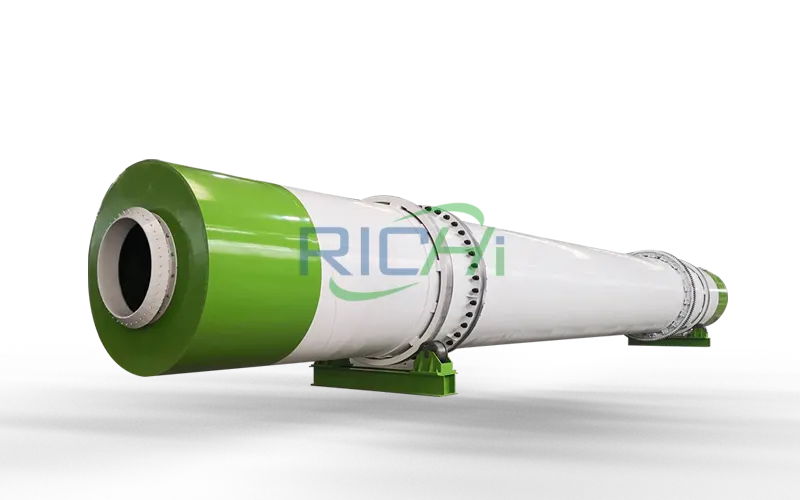
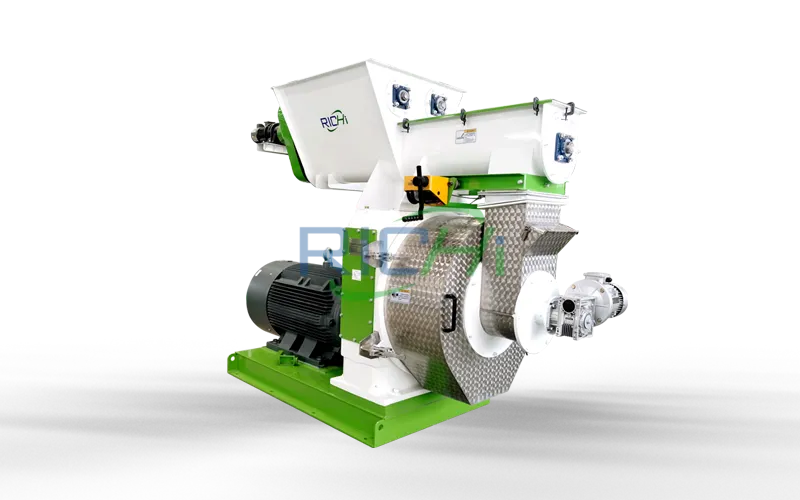
Counterflow Pellet Cooler
Vibrating Grading Screen
Packing Machine
U-Shaped Auger Conveyor
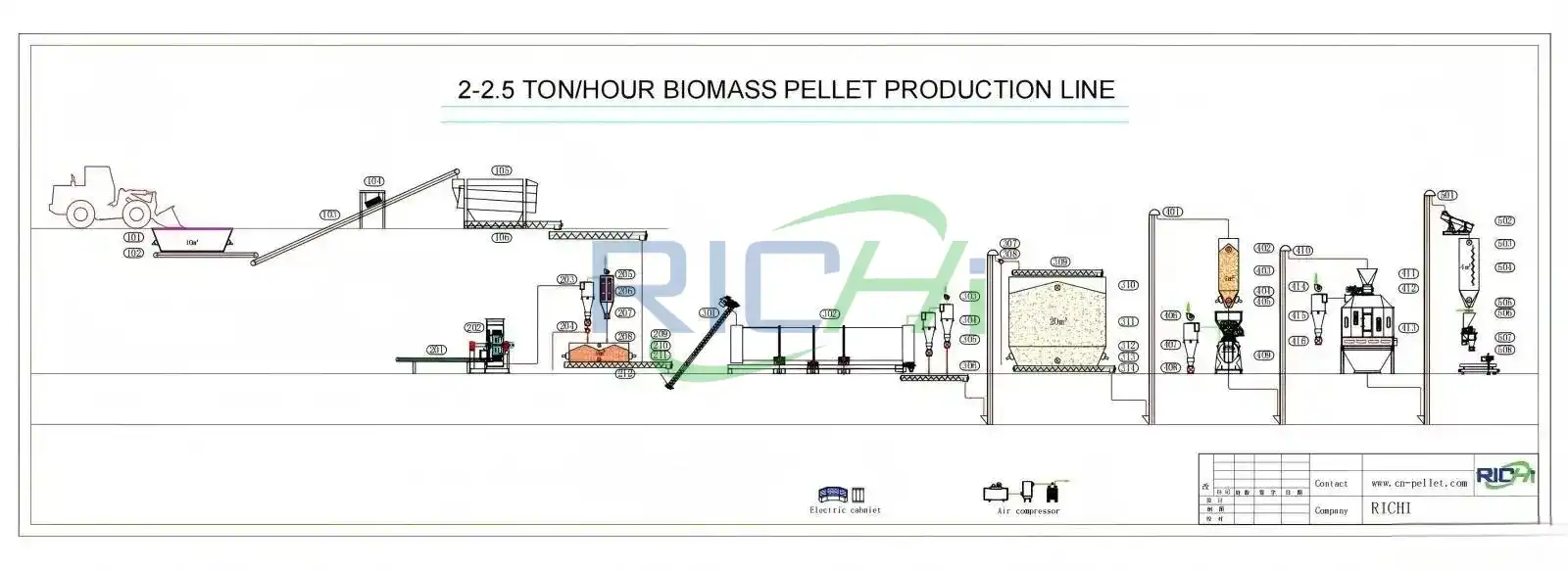
Process Flow of wood pellet Production Line in Romania
The wood pellet production line in Romania uses beech sawdust, wood chips, and forest waste branches as raw materials. Through processes such as cleaning (iron and impurity removal), crushing, drying, homogenization, granulation, cooling, and packaging, it produces wood chip pellets with a size of 6mm.
1
Raw Material Cleaning Section:
The Romanian customer’s primary raw material is beech sawdust, which requires no secondary crushing. Only a rotary pre-cleaner is used to remove impurities (such as stones, iron filings, and large wood blocks).
2
Crushing Section:
A wood chip crusher with both chipping and crushing functions is utilized to grind raw materials (e.g., wood chips, forest waste branches) into sawdust of approximately 3mm, facilitating subsequent granulation.
3
Drying Section:
The crushed woody raw materials are fed into a rotary drum dryer for drying, controlling the moisture content to around 15%. This ensures optimal granulation results and improves pellet formation rate.
4
Homogenization Section:
The dried sawdust is conveyed into a storage silo for thorough mixing and homogenization. This process eliminates inconsistencies in particle size distribution and moisture content of the raw material, ensuring uniform physical properties (e.g., density, fluidity) before granulation.
5
Granulation Section:
The dried raw materials are put into the feed hopper, which is equipped with an arch-breaking device to prevent material caking through continuous stirring. The granulator is fitted with a forced feeder that pushes materials into the granulation chamber. Inside the chamber, the wood chip raw materials are extruded and shaped into dense pellets.
6
Cooling Section:
Freshly formed wood pellets are conveyed to the cooling system via a belt conveyor. The cooler rapidly reduces the pellet temperature to room temperature, avoiding adhesion or mold growth.
7
Screening Section:
After cooling, the wood pellets pass through a vibrating screen to remove fine impurities. Qualified finished products flow into the finished product silo, while powder and oversized pellets are recycled for secondary processing.
8
Finished Product Packaging Section:
Automatic packaging scales accurately weigh and package the finished pellets according to preset weights.
Romanian Wood Pellet Production Line Project Execution Process
The Romanian wood pellet production line project follows five phases—analysis & design, equipment production, installation, training, trial operation—ensuring customized, stable delivery.
1
Project preparation
Communicate with the customer on raw material characteristics, site conditions, capacity targets and compliance requirements. Complete process flow design, equipment selection, layout planning, and provide customized project proposals and drawing confirmation.

2
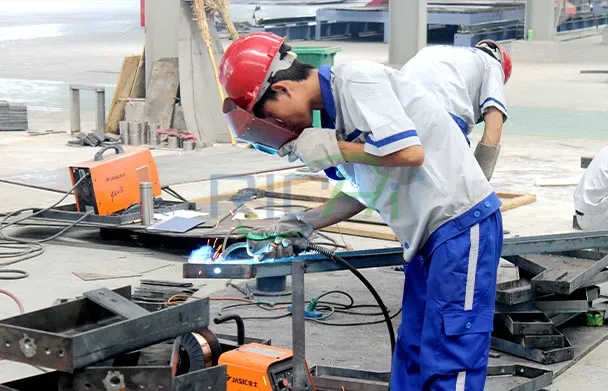
Equipment Production
Manufacture, pre-assemble and conduct functional tests for all unit equipment (crushing, drying, granulation, cooling, screening, packaging, etc.) in the factory per the design plan to ensure compliance with technical specifications.
3
Equipment Installation & Commissioning
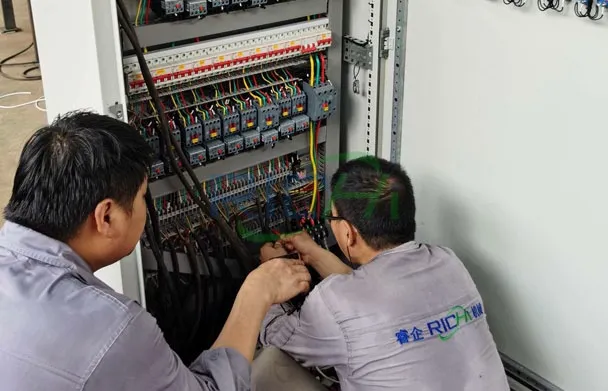
After equipment delivery to the Romanian project site, our professional team provides installation guidance and system integration. Complete mechanical, electrical and control system joint commissioning, optimize operating parameters, and achieve stable trial operation.
4

Personnel Training
RICHI Machinery provides systematic training for the client’s staff, covering equipment operation, daily maintenance, troubleshooting and safety regulations to ensure the team’s independent operation capability.
5
Production Line Trial Operation
Conduct continuous production tests with actual raw materials to verify capacity, finished product quality and system stability. Fine-tune processes based on operational data, complete final acceptance and hand over long-term operation guidelines.
After-Sales Service and Long-Term Support
To ensure the long-term stable operation of the production line and maximize return on investment, RICHI provides a comprehensive after-sales support system that spans the entire project lifecycle.
Technical Support Response
We offer 24/7 online support and intelligent remote diagnostics. If the problem cannot be resolved remotely, our professional engineers will arrive on-site within 48-72 hours.
Warranty Commitment
A 12-month comprehensive quality warranty is provided from the date of equipment commissioning and acceptance.
Spare Parts Supply
We can supply key spare parts (such as bearings, transmission components, ring dies, etc.) to ensure perfect matching with equipment and stable performance, and offer preferential prices to project customers.


1
What is the production capacity and annual output of this wood pellet production line in Romania?
The designed production capacity is 2-2.5 tons per hour, with an annual output of approximately 8,000 tons, capable of meeting stable supply demands for the small-to-medium-scale biomass fuel market.
2
What raw materials is the production line suitable for?
The line is specifically adapted for locally common raw materials in Romania, including beech sawdust, wood chips, forest waste branches, waste furniture, formwork, wood shavings, and other wood processing residues. It has strong material adaptability and does not require additional pre-processing equipment.
3
Does the project comply with EU environmental standards?
Yes. This Romania wood pellet production line is equipped with a negative-pressure air draft system and a sealed dust collection device, ensuring dust emission concentrations below 5 mg/m³. It complies with EU environmental regulations and has obtained CE certification.
4
How long does it take from installation to full operation?
The entire project timeline is approximately 5 months, including: The entire project cycle is approximately 5 months: 60 days for production, 40 days for sea freight, and 60 days for installation.
5
Is the wood pellet production line in Romania designed for future expansion?
Yes. Space has been reserved for the addition of two more pellet mills during the design phase. Future expansion will not require large-scale modifications to the production line, significantly saving time and modification costs. (View our YouTube)